Artificial Pet Turf, Rock, or Grass for Dogs?
Comparing rock, grass, and artificial pet turf? Learn how to choose, install, and maintain the best backyard dog surface for easy cleanup and better curb appeal.
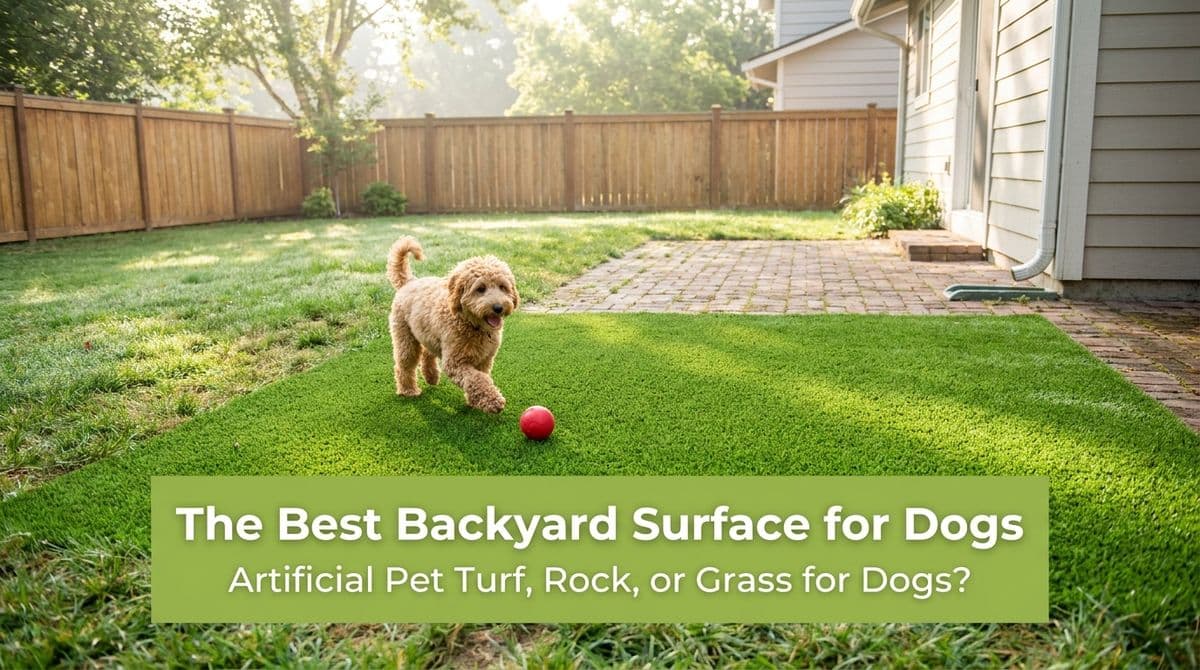
From Rocky Dog Run to Cozy Pet Turf
We recently got a call from a homeowner — let’s call her Melissa — who wanted to know if we install artificial pet turf. She and her husband had a small, 15-by-20-foot side yard set up as a dog run with rocks. It worked “okay,” but it was a pain to clean, their dogs didn’t love it, and they were pretty sure the new neighbors weren’t thrilled with the look either.
They’d gotten a quote from a turf-only company months earlier, then put it on hold while they tackled other construction projects. Now they were ready to revisit the idea and compare costs, pros and cons, and timing. We walked her through the options during our call and onsite visit. We’ll share the same guidance here to help you decide what’s best for your own backyard dog area.
Pet Turf vs. Rock vs. Natural Grass: What’s Best for Dogs?
If you’re like Melissa, you might be wondering whether to stick with rock, try to grow grass, or invest in artificial turf. Each surface has tradeoffs.
Rock (Gravel) Dog Runs
Rock and gravel are common in narrow side yards because they’re inexpensive and low-maintenance. But for dogs, they’re not always ideal.
- Pros: Cheap to install, drains well, no mowing, no mud.
- Cons: Hard on paws, can get very hot in the sun, urine odor can build up, and solid waste is harder to clean between rocks.
- Appearance: Functional, but not exactly “backyard oasis,” especially when it’s the first thing neighbors see over the fence.
Natural Grass
Natural grass is comfortable for dogs and looks great when it’s healthy, but dogs can be tough on it.
- Pros: Soft, cool underfoot, natural look, good drainage when soil is prepared correctly.
- Cons: Brown urine spots, mud in rainy seasons, requires watering, mowing, and fertilizing. High-traffic dog areas often turn to dirt patches.
- Maintenance: Ongoing, and in small, high-use runs, you may find yourself constantly re-seeding or re-sodding.
Artificial Pet Turf
Artificial pet turf is designed specifically for dogs and solves several issues that rock and grass struggle with in small, heavily used areas.
- Pros: Easy cleanup, no mud, no mowing, stays green year-round, more comfortable than rock, looks tidy and finished.
- Cons: Higher upfront cost, requires proper installation to avoid odor or drainage problems, can be warmer than natural grass.
- Best for: Small side yards, dog runs, and high-traffic potty areas where grass won’t survive and you want a cleaner, more attractive look.
Key Features of Quality Pet Turf
Not all turf is created equal, especially for pets. When we design a dog area, these are the features we focus on:
- Permeable backing: Allows urine to drain through quickly into a base that carries water away. This is critical for odor control.
- Antimicrobial infill: Specialized infill helps reduce bacteria growth and odors compared to standard sand or rubber.
- Shorter pile height: For pet areas, a slightly shorter blade length makes solid waste easier to see and pick up.
- Durability: Turf rated for high traffic so it can handle running, zoomies, and those same “favorite pee spots” every day.
Odor Control & Drainage: The Make-or-Break Details
Melissa’s biggest complaint with her rock dog run was odor and cleanup. With the right turf system, those two issues get much easier — but only if the drainage is done correctly.
How We Build the Base
Under the turf, we install a compacted base designed to drain well:
- Remove existing rock/soil to the proper depth.
- Install a layer of crushed stone or similar material.
- Compact it to the right slope so water runs away from the house.
- Add a finer layer on top for smoothness before the turf goes down.
This base, combined with the turf’s permeable backing, helps keep urine moving through instead of pooling at the surface.
Everyday Odor-Reducing Habits
Even with a good install, habits matter. We usually recommend homeowners:
- Pick up solids daily to prevent staining and bacteria buildup.
- Rinse the area weekly with a garden hose, more often if you have multiple dogs.
- Use an enzyme-based cleaner occasionally on favorite spots to break down organic material.
Cost Factors for Pet Turf Installations
Like Melissa, many homeowners want to “get a couple quotes” and see what’s most cost-effective. Pet turf has a higher upfront cost than rock or seed, but over time, the lack of mowing, watering, and re-sodding often evens things out — especially in small, dedicated dog areas.
The price depends on:
- Size of the area: A 15' x 20' run will cost less overall than a full backyard, but the per-square-foot cost can be higher on very small projects due to fixed labor and materials.
- Access: Tight side yards, steps, or limited access can add labor.
- Existing conditions: Removing old rock or concrete, correcting drainage, or working around utilities affects the quote.
- Product selection: Pet-specific turf and antimicrobial infills cost more than basic options, but they perform better for dog areas.
We always walk homeowners through these factors during the onsite visit so they understand exactly what’s driving the cost.
How Pet Turf Improves Small Side Yards & Dog Runs
One of Melissa’s concerns was curb appeal. The rock run had done its job, but it looked more like a temporary construction zone than part of a finished yard. Pet turf can really transform these forgotten strips of space.
- Cleaner look from the street and over the fence — no more scattered rock or bare patches.
- Defined edges with paver borders or metal edging make the area look intentional, not leftover.
- More comfortable for dogs to lie down and play instead of constantly navigating sharp rock.
In many cases, neighbors appreciate the upgrade just as much as the homeowners do.
Is Pet Turf Right for Your Home?
If your current dog area is a mix of mud, rocks, and frustration — and you’re tired of fighting with it — pet turf can be a solid long-term solution. It’s especially effective in small, high-traffic spaces where grass can’t survive and looks matter, like side yards and narrow dog runs.
When we come out for a consultation, we look at your space, talk through how many dogs you have and how you use the area, review turf and infill options, and give you a detailed proposal and timeline. Even if you’re just starting to compare quotes like Melissa was, getting solid information tailored to your yard makes the decision a lot easier.