Backyard Design Ideas for Pool Yards’ Fence Zones
Got a small backyard dominated by a pool and awkward strips along the fence? Here’s how we turn those “dead zones” into clean, usable, low-maintenance features.
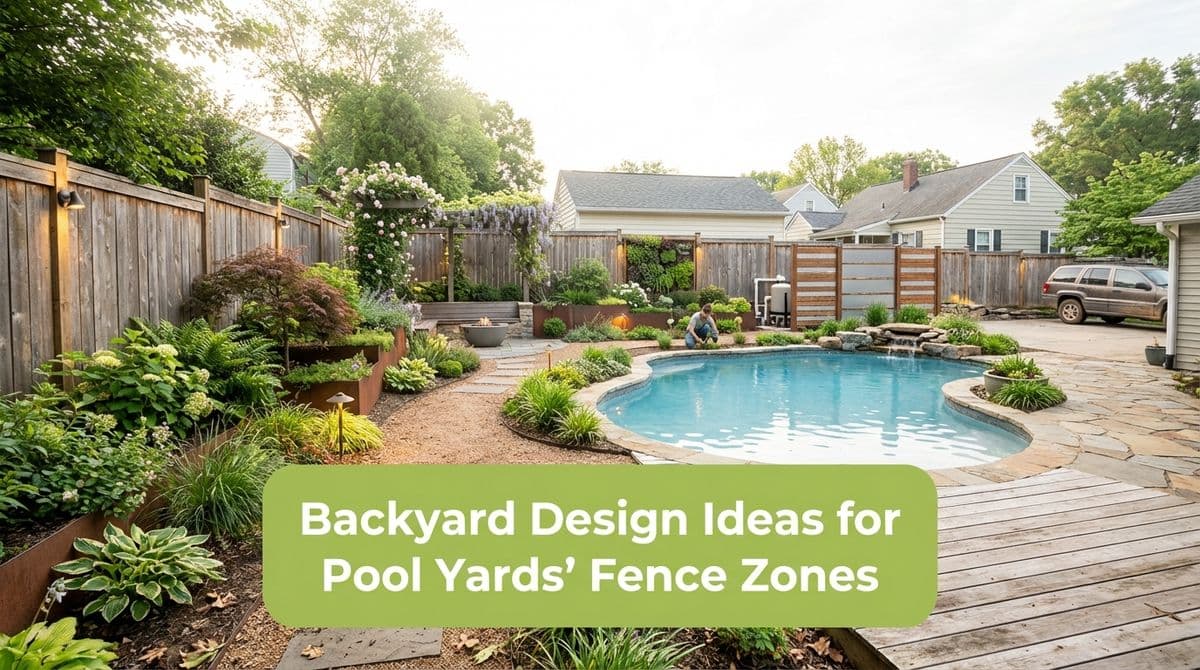
Turning “Dead Zones” by the Fence Into Backyard Features
We recently got a call from a homeowner — let’s call him Jason — whose words probably sound familiar to a lot of pool owners: “My backyard is kind of a mess.”
Jason has an in-ground pool that takes up most of his small backyard. Along two sides of the pool, there’s a narrow strip of grass, and on the short side against the fence he used to have old vines. After a heavy winter snowstorm, the weight of the snow ripped those vines down. He cut everything back, and what was left under them was exactly what many of us see after removing old growth: bare soil, dead roots, and a long, awkward strip of nothing hugging the fence.
He asked us a really common question: “Do I just reseed it and wait a couple seasons? Should I do gravel, or maybe a horseshoe pit? It just looks pretty gross right now.”
That conversation is a perfect example of what a lot of pool-centric yards struggle with — those weird “dead zones” along the fence that don’t know what they want to be when they grow up.
Step One: Look at How You Actually Use the Space
Before we talk design ideas, it helps to quickly assess two things the way we did with Jason:
- How close is that strip to the pool edge? Is it a few feet away, or right up against coping and concrete?
- How do you use (or want to use) the yard? Entertaining, kid play space, quiet lounging, pets, games?
In small, pool-dominated yards, every linear foot matters. The goal isn’t just to “fill the gap” but to choose something that works with how you live outside, not against it.
With Jason, we talked through how he hosts in summer, where people walk around the pool, and whether kids or guests might be cutting through that area. That helped us narrow down whether it should be a walkway, planting bed, game zone, or low-maintenance filler.
Option 1: A Clean, Low-Maintenance Stone Border
Jason’s first thought was small stones, and that’s actually a strong option for many pool fence lines — if it’s done intentionally.
Here’s how we typically approach a stone treatment along the fence:
- Define the edge: Install a metal or paver edging between the grass and the stone so the rocks stay put and mowing stays clean.
- Use the right base: Strip out the dead vines and roots, level the soil, lay down a high-quality landscape fabric, then add 2–3 inches of decorative stone.
- Choose stone that fits the pool: For modern pools, we like river rock or clean crushed stone; for a more rustic feel, pea gravel can work (as long as it won’t migrate into the pool).
A simple stone band instantly turns a “gross” bare strip into a finished, intentional border that’s easy to maintain and won’t turn muddy after storms.
Option 2: Narrow Planting Beds That Don’t Crowd the Pool
If you miss the greenery from old vines but don’t want that overgrown look again, a slim planting bed can soften the fence without stealing space from the pool.
In situations like Jason’s, we often suggest a design like this:
- Depth: A 2–3 foot deep bed along the fence — just enough for a single row of shrubs or ornamental grasses.
- Layered height: Taller plants closer to the fence, lower plants towards the pool, so the space still feels open.
- Pool-friendly plants: Avoid super-messy, thorny, or bee-attracting varieties right by the water.
The key is to pick plants that won’t shed tons of debris into the pool and can handle reflected heat from water and hard surfaces. Think evergreen shrubs, compact hydrangeas, or clumping ornamental grasses instead of aggressive vines that pull fences down when snow piles up.
Option 3: Turning a Dead Zone Into a Game or Lounge Strip
Jason floated the idea of a horseshoe pit because the strip seemed “about the right size.” We love using these awkward runs for activity space, as long as safety and clearances check out.
Some ideas we often consider for long, narrow fence lines:
- Horseshoes or cornhole: If there’s enough distance from the pool edge and windows, a small game zone can be a fun focal point.
- Gravel lounging strip: A couple of Adirondack chairs on compacted gravel with a small side table becomes a quiet nook away from the splashing.
- Outdoor storage run: A neat row of low deck boxes or a slim shed can corral pool floats, toys, and equipment.
With Jason, our plan was to walk the yard together and map out the paths people naturally take. If everyone hugs that side of the pool to move between the gate and the patio, we’d lean more toward a durable walkway or stone band than a game zone, so it doesn’t become a tripping hazard.
Option 4: Reseeding Grass — When It Makes Sense (and When It Doesn’t)
Jason mentioned just stripping everything and putting grass down, but worried it would take a couple of seasons to really fill in. He’s not wrong — especially in areas that have been shaded by vines for years and compacted by roots.
We usually recommend grass in those fence-side strips only if:
- You truly want that area as usable lawn (for pets, kids, or extra hangout space), and
- You’re okay with ongoing mowing and trimming right next to the fence and pool.
If the strip is mostly “look but don’t use,” stone or planting beds tend to be less maintenance and more attractive than trying to force lawn to thrive in a skinny, awkward space.
Practical Tips Before You Commit to a Plan
When we visit yards like Jason’s, we always walk through a few practical checks with the homeowner:
- Drainage: Make sure whatever you add won’t trap water against the fence or send runoff into the pool.
- Snow load: If you’re in a snowy climate, avoid heavy vines or structures that could get ripped down again.
- Maintenance: Ask yourself honestly how much time you want to spend trimming, weeding, or sweeping debris out of the pool.
- Future flexibility: Choose a design that can evolve — for example, a stone band where you can later add planters or low lighting.
Our goal with Jason — and with any small, pool-centric yard — is to turn those “dead zones” along the fence into clean, purposeful features that either frame the pool beautifully or quietly disappear so the water and gathering spaces can shine.
If your own backyard feels a little like Jason’s “before” picture, those awkward fence lines are actually one of the easiest places to start. With the right plan, they can go from eyesore to asset in a single weekend project or a simple professional install.