Planning a Backyard Fence & Landscape Makeover
Thinking about a new fence, turf sports area, dog run, or fire pit? Learn the best order to tackle a full backyard makeover from survey to final touches.
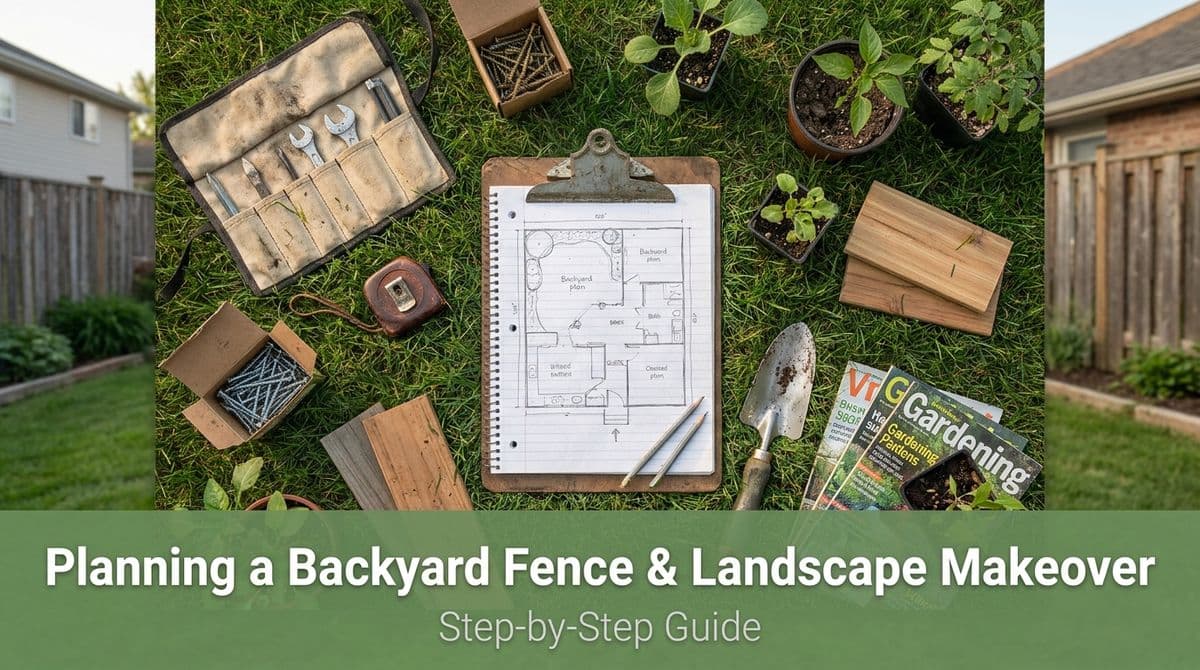
Planning a Backyard Makeover: How One Call Turned into a Master Plan
We recently got a call from a homeowner — let's call him Jason — who was staring at a backyard full of potential and wondering where to start. He lives in a wooded community, had a fairly clear yard, but the perimeter was a bit overgrown. He wanted a new fence, some land clearing, a turf sports area for his kids, a refreshed chicken coop space, a dog run with rock, and a cozy fire pit area.
Jason’s biggest question was one we hear all the time: “What order should I do all this in, and when do I need a survey or permits?” We walked him through the process step by step, and we’ll walk you through that same plan here so you can avoid headaches, wasted money, and re-doing work.
Step 1: Start with the Survey (Here’s When You Really Need It)
If you’re planning a new fence, the land survey is almost always the first thing that should go on your calendar. Jason hadn’t ordered his survey yet and was surprised to hear it could take a few weeks to a month to get it back. That timing is normal in most areas.
Here’s why the survey matters so much:
- Fence location & permits: Many zoning departments require a stamped survey to issue a fence permit.
- Property line clarity: It prevents “my fence is on your land” disputes with neighbors.
- Design accuracy: We can design your dog run, sports area, and fire pit with exact dimensions.
If you already have old drawings from when you bought your house — like Jason did — those are helpful, but they usually aren’t enough for permitting. We always recommend:
- Order the survey as soon as you start dreaming seriously about a fence.
- Ask the surveyor for both a PDF and a hard copy you can mark up during planning.
Step 2: Plan the Big Picture Before Anyone Starts Digging
While you’re waiting for the survey, that’s the perfect time to map out how you want to use your backyard. Jason had a lot of specific goals: space for dogs, chickens, kids’ sports, and family hangouts — all in one yard.
We always encourage homeowners to think in terms of zones:
- Dog zone: Often a rock or gravel surface inside a smaller fenced area so mud stays contained.
- Chicken zone: Coop area with secure fencing, easy access, and materials that are simple to clean.
- Sports zone: A level base with artificial turf over compacted stone for basketball, lacrosse, or soccer.
- Relax zone: Fire pit area with seating, maybe pavers, gravel, or stone around it.
Once those zones are defined, we can lay them out on the survey so the fence line, gates, and walkways support how your family actually lives, instead of just wrapping a fence around the yard and trying to make everything fit later.
Step 3: How Much to Clear Before Fence Installation
Jason’s backyard was mostly open, but the perimeter was about five to six feet deep with trees and brush. He wasn’t sure how much to clear before the fence went in, and he was worried that installing the fence too early would just make everyone’s job harder later.
We generally recommend:
- Clear at least a 6–8 foot wide path along the fence line so installers can work safely and efficiently.
- Remove stumps, big roots, and large rocks where fence posts will go.
- Rough grade the perimeter so the fence doesn’t end up floating over high spots or buried in low spots.
If you’re fairly confident about where your property line is (using old drawings, existing pins, or neighbor fences), we can often start perimeter clearing before the survey is officially complete — as long as we stay safely inside the presumed property line. For anything right on the line, we wait for the survey to avoid future issues.
Step 4: The Best Order of Operations for Multi‑Project Backyards
Homeowners like Jason are smart to think about timing. Done in the wrong order, you can end up paying twice — for example, laying turf and then tearing some of it up for drainage or fence post work. We usually suggest this sequence:
- Survey & overall design
Get the survey done and map out where everything goes: fence, gates, dog run, chicken coop, sports area, and fire pit. - Clearing & rough grading
Clear trees, brush, and unwanted vegetation. Rough grade the yard so water flows away from the house and key use areas. - Drainage & underground work
Install any drains, conduit for lighting, irrigation sleeves, or utility lines before surfaces go in. - Fence installation
Once the yard is cleared and roughly graded, bring in the fence company. It’s easier for them to work, and the fence won’t be in the way of heavy clearing equipment. - Hardscape & base prep
Build borders, edging, and base for turf, rock areas, and fire pit zones. - Turf, rock, mulch & planting
Finish with artificial turf, decorative rock, mulch beds, and new plants.
This is the framework we walked Jason through, and it kept all of his projects — from dog run to sports turf — moving in the right direction without backtracking.
Coordinating Fence Companies and Landscape Contractors
In Jason’s case, we handled the clearing, grading, turf, fire pit area, and general landscape design, while a separate fence company installed his perimeter fence and dog pen. That kind of split is very common.
Here’s how we like to coordinate with other contractors:
- Shared plan: We create a basic site plan showing fence line, gates, and all major zones, then share it with the fence contractor.
- Clear scope: We spell out who is responsible for posts, gates, and any interior fencing (like a chain link dog run) versus who’s doing rock or turf inside that area.
- Schedule alignment: We aim to finish clearing and rough grading before the fence crew arrives, then come back after they’re done to complete turf, rock, and planting.
If you’re hiring multiple companies, it really helps to choose one as your “general coordinator” — usually the landscape contractor — and let them help keep the order and timing straight.
Design Ideas to Tie Dogs, Chickens, Sports & Fire Pits Together
Jason didn’t just want a functional yard; he wanted it to look intentional. We see this a lot when yards need to work hard — with pets, kids, and outdoor living — but still feel cohesive.
Some of our favorite strategies:
- Consistent borders: Use the same edging (pavers, metal, or stone) around the turf sports area, dog run, and fire pit to visually connect them.
- Pathways that make sense: Add a simple walkway from the house to the sports area and coop so you’re not walking through wet grass or mud.
- Material contrast: Pair soft turf with hard gravel or rock in the dog run so those areas are clearly defined but still complementary.
- Screening & privacy: Use shrubs or small trees along the fence line to soften the perimeter and hide utility spaces like the coop.
When we met Jason in person, we walked his yard, matched his ChatGPT renderings to the actual space, and adjusted the plan so it worked with real‑world slopes, trees, and property lines. That combination — a dream on paper plus an honest site walk — is where the best backyard makeovers come from.
Ready to Start Your Own Backyard Makeover?
If you’re looking at your backyard and thinking about fences, dogs, chickens, kids’ sports, and fire pits all at once, you’re not alone. We help homeowners every season turn that “where do I even start?” feeling into a clear, step‑by‑step plan.
Start by getting your survey on the schedule, then reach out so we can walk your property, talk through your goals, and build a plan that keeps every contractor — and every part of your yard — working together.