Drought or Lawn Fungus? Diagnose Brown Patches First
Brown patches in your lawn? Learn how to tell drought stress from fungus before you spend money on the wrong treatment.
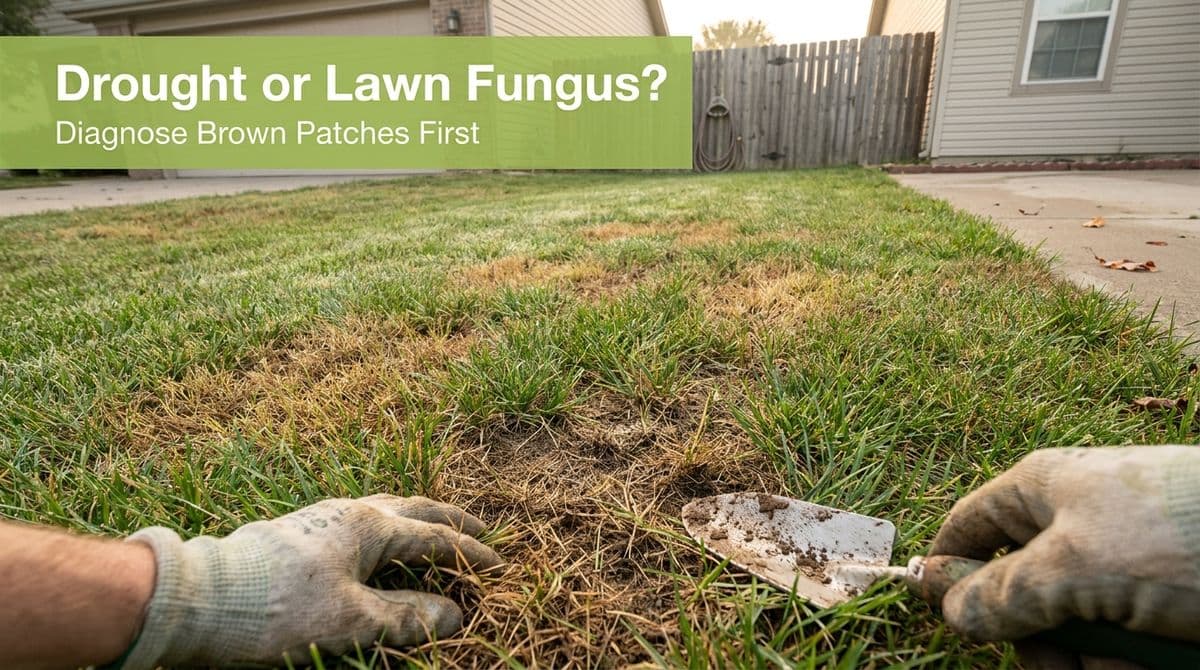
Is That Brown Patch Drought or Lawn Fungus?
We recently got a call from a homeowner — let’s call him Mike — who lives just a few houses down from a big landscaping project we finished last season.
“My yard looked great,” Mike told me, “and now I’ve got these brown patches. I can’t tell if it’s dried out from the sun or some kind of fungus. I don’t want to waste money on the wrong stuff.”
Mike had already been Googling symptoms, reading about red thread, seeing advice about early-morning “webbing,” and staring at his lawn wondering what on earth to put down. That’s a common place homeowners get stuck: is it drought stress, fungus, or something else completely?
In our conversation with Mike, we walked through exactly how we diagnose brown patches before anyone spends a dollar on treatments. I want to share that same thought process here so you can use it in your own yard.
Step 1: Look at the Pattern, Not Just the Patch
The first thing we asked Mike was how the brown areas were laid out across his lawn.
Here’s a simple rule of thumb we use all the time:
- If a whole zone or section is struggling — especially one tied to a specific sprinkler zone — we suspect water issues (drought or irrigation).
- If the lawn is getting watered evenly, but you’re still seeing random or irregular dead spots, we start thinking fungus or pests.
So we asked Mike:
- “Are these patches mostly in one area, or sprinkled all over?”
- “Do you have a zone that might not be reaching part of the yard?”
If your lawn is browning in one obvious section, go outside during a watering cycle and watch your sprinklers:
- Are all heads popping up and rotating properly?
- Is there a dry “shadow” where a head isn’t reaching?
- Is water pressure weak at the far end of the zone?
When a full area is dry and crispy and you know that sprinkler coverage there is sketchy, nine times out of ten you’re dealing with drought stress, not fungus.
Step 2: Get Down in the Grass and Check the Blades
Mike mentioned something a lot of people miss: “My mower app says my blade might be dull because the tips of the grass look split and ragged.”
That’s a big clue. Dull mower blades shred grass instead of cutting it clean. Shredded tips turn brown and make the whole lawn look stressed — and stressed grass is more vulnerable to disease.
Here’s what to look for when you inspect a few blades up close:
- Crisp, clean cut tip → blade is probably sharp.
- Frayed, white or tan, shredded tip → blade is dull and stressing the lawn.
While this doesn’t tell you drought vs. fungus directly, it tells you whether mowing practices are adding extra stress. Fixing a dull blade won’t cure fungus, but it will help your grass recover faster from whatever’s going on.
Step 3: Check Moisture and “Feel” the Patch
Next, we walked Mike through a simple hands-on test you can do in a minute:
- Push a screwdriver or a sturdy stick into the soil in a brown area.
- Do the same in a nearby healthy green area.
If it’s hard to push in and the soil feels powdery or very dry compared to the green area, that points to drought or hydrophobic soil. If the soil is actually moist but the grass is still browning and thinning, that’s when we start suspecting fungal disease or root issues.
Also pay attention to the texture:
- Drought: Grass blades feel dry, crunchy, straw-like. Often an overall faded color, not sharply defined spots.
- Fungus: Patches may have sharper edges, sometimes circular patterns, or a “mottled” look with thinning grass and some slimy or mushy feel when it’s wet.
Step 4: Morning Clues — But Don’t Overthink Them
Mike had read about webbing and red threads and was confused because he wasn’t seeing much of anything in the morning.
The truth is, not every fungus shows dramatic symptoms you can easily spot. Some diseases do produce things like:
- Grayish or cobweb-like mycelium on the grass in early morning.
- Pink or red threads on the tips of blades.
But even if you don’t see that, you could still have a disease issue. Use those signs as supporting evidence, not the only test. If the lawn is being watered evenly, the soil is moist, and you still get expanding brown patches, fungus is a strong suspect even without textbook symptoms.
Step 5: Think Twice Before You Grab a Fungicide
One of Mike’s biggest concerns was, “I don’t want to put a fungicide down if it’s not fungus.” That’s smart — fungicides aren’t cheap, and there are different types:
- Preventative fungicides: Best before disease shows up, or in high-pressure seasons.
- Curative fungicides: Formulated to knock back an active infection.
- Products that do both: Offer some curative and residual protection.
Blanketing your yard with a generic product “just in case” can waste money and still not solve the problem. As we told Mike, it’s worth having a good lawn care or turf specialist actually diagnose what’s happening, especially if the lawn was healthy not long ago and suddenly went downhill.
And remember: even the best fungicide won’t fix the underlying issues if the real problem is poor irrigation, compacted soil, or mowing stress.
When to Call in a Turf Pro (and What We Focus On)
In Mike’s case, we were honest: our core work is patios, hardscaping, sod, lighting, and planting. We understand turf science, but specialized lawn diagnostics and chemical treatments are a different lane. So we pointed him to a dedicated lawn care company we trust.
If you’re stuck between drought and fungus and don’t want to waste money guessing, here’s what we recommend:
- First, go through the steps above: check sprinkler coverage, soil moisture, mowing practices, and pattern of damage.
- If the lawn is evenly watered and the problem keeps spreading, call a reputable lawn or turf care service for a proper diagnosis.
In the meantime, you can always ask us to look at the bigger picture — grading, drainage, shaded vs. sunny areas, and whether your irrigation layout might be setting the lawn up for stress in the first place. Getting those basics right often makes the difference between a lawn that constantly fights disease and one that shrugs it off.
If you’re staring at brown patches and not sure what you’re up against, reach out. We’re happy to talk through what you’re seeing and help you figure out whether it’s a simple watering tweak, a maintenance issue, or something that needs a turf specialist’s eye.