Why Newly Installed Plants Die in 55+ Communities
Many new plants in 55+ communities die within a year. Here’s why it happens and how to redesign your front yard for lasting, low-maintenance curb appeal.
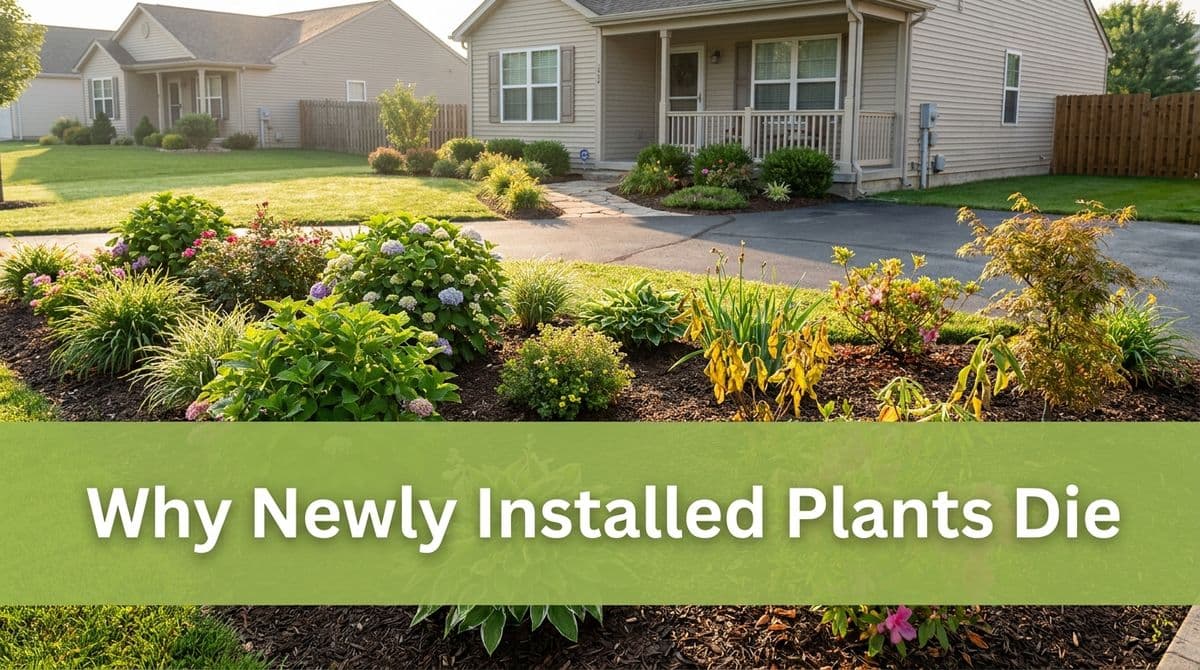
Why So Many New Plants Die in 55+ Communities
We recently got a call from a homeowner in a 55+ community — let’s call her Linda. She told us, “We had plants put in last year, and they’ve all died. I’ve got two left that are dead now. I have to do something different.”
We hear some version of Linda’s story all the time, especially from 55+ neighborhoods where the builder or HOA had “standard” foundation plantings installed. On the surface, everything looked nice that first season… and then, one by one, the plants started to brown out, thin out, and finally disappear.
In this post, I want to walk through why this happens so often in 55+ communities and what we recommend instead if you want a front yard that looks good without a lot of work.
The Hidden Problems With Builder & HOA Plantings
When we visit homes like Linda’s, a few patterns show up over and over again. The plants didn’t just “decide” to die — the deck was stacked against them from day one.
1. Wrong plant in the wrong place
In many developments, the same few shrubs are planted in front of every house, no matter which direction the house faces. A plant that barely gets morning light on a shady north side might be baked all afternoon on a sunny south side down the street.
Common issues we see:
- Shade plants in full sun – foliage burns, leaves crisp up, plant slowly declines.
- Sun lovers in deep shade – leggy, weak growth, poor flowering, prone to disease.
- Moisture needs ignored – some plants like “evenly moist” soil, but they’re placed in a hot, dry corner by the driveway.
On top of that, many 55+ homes have small planting beds squeezed between walkways, the house, and the driveway. Those areas heat up fast and reflect a lot of sun — not every shrub can handle that.
2. Poor soil and construction leftovers
When a community is built, the good topsoil is often scraped away. What’s left is compacted subsoil, sometimes mixed with construction debris. Then a thin layer of topsoil or mulch goes on top and the plants go in.
The result for new plants:
- Roots can’t spread because the ground is too hard.
- Water runs off instead of soaking in, so plants dry out quickly.
- In wet spots, water can sit and cause root rot.
From the street it may look fine, but underground the plants are struggling from day one.
3. Inconsistent watering in the first year
The first year is critical. Even “low-maintenance” or “drought-tolerant” plants need regular watering while they establish. That’s tough in a community where homeowners are told the plants are easy and no one gives clear instructions.
What we typically see:
- Overwatering by well-meaning neighbors or HOA crews, especially if sprinklers are set for lawns, not shrubs.
- Underwatering when people assume rain is enough, but the roof overhang and eaves keep beds dry.
- Watering too shallow, keeping roots near the surface instead of encouraging them to go deeper.
By the second summer, those plants hit a heat wave and simply don’t have the root system to survive.
What to Do Instead: A Low-Maintenance Front Yard That Lasts
When we meet homeowners like Linda, our goal is not just to “replace the dead plants.” We want to give them something that looks good, fits the community rules, and doesn’t become another headache in a year or two.
1. Start with your sun, shade, and HOA rules
First, we walk the front of the house and note:
- Which direction the house faces (north, south, east, west).
- How many hours of direct sun each bed gets.
- Wind exposure (corners can be harsh in winter).
In a 55+ community, we also review any HOA guidelines: plant height limits, color preferences, no-gravel rules, etc. The trick is designing something that feels like you, but fits nicely into the community standards.
2. Choose truly low-maintenance plants
“Low-maintenance” is one of the first things people like Linda tell us, and we take that seriously. Here’s what we typically look for:
- Right-sized shrubs that won’t need heavy pruning to stay off walkways or below windows.
- Disease- and pest-resistant varieties that don’t need spraying.
- Long-lived perennials instead of high-turnover annuals.
- Mix of evergreen and seasonal color so there’s interest year-round without a lot of fuss.
We’ll often repeat the same 3–5 reliable plants in a simple pattern. That repetition looks clean and intentional, and it’s much easier to maintain than a “collector’s garden” with one of everything.
3. Improve the soil once, so you work less later
Before any new plants go in, we tackle the soil. Even in a small front yard bed, this makes a huge difference in survival and long-term health.
Our typical steps:
- Remove dead plants and as much of the old root system as possible.
- Break up compacted soil 8–12 inches deep.
- Mix in compost to improve drainage and nutrient content.
- Shape the bed slightly so water doesn’t pool against the foundation.
This is work you only want to do once — but done right, it sets you up for years of healthier plants and less frustration.
Simple Care Tips for the First Year
Even the toughest plants need a little help getting started. When we finish a project for homeowners in communities like Linda’s, we leave them with a simple, realistic care plan.
Watering, mulch, and pruning made easy
- Water deeply, not daily: Aim for 1–2 good soakings a week in the first growing season (more during heat waves), rather than frequent light sprinkles.
- Use 2–3 inches of mulch: This helps keep roots cool, conserves moisture, and cuts down on weeds. Just keep mulch a few inches away from trunks and stems.
- Minimal pruning: With properly sized plants, you should only need an occasional light trim to keep a neat shape.
Most of our 55+ clients tell us they’re happy to do a little watering and light upkeep — they just don’t want a part-time job in the yard. A thoughtful design and proper installation make that possible.
Thinking About Redoing Your Front Yard?
If your experience sounds like Linda’s — plants installed, then gone within a year — it doesn’t mean you have a “black thumb.” It usually means the original plants weren’t chosen or installed with your specific home and lifestyle in mind.
With the right plant choices, better soil preparation, and a simple watering plan, you can have a front yard that looks welcoming, fits your 55+ community, and doesn’t demand constant attention. And if you’d like help working through options for your own home, that’s exactly why we’re here.