500 Sq Ft Paver Patio Upgrade Built from the Ground Up
Old paver patios don't fail at the surface - they fail underneath. The base breaks down, water pools, sections shift, and before long you're dealing with a patio that's more headache than hangout spot. That's exactly the situation we were working with here.
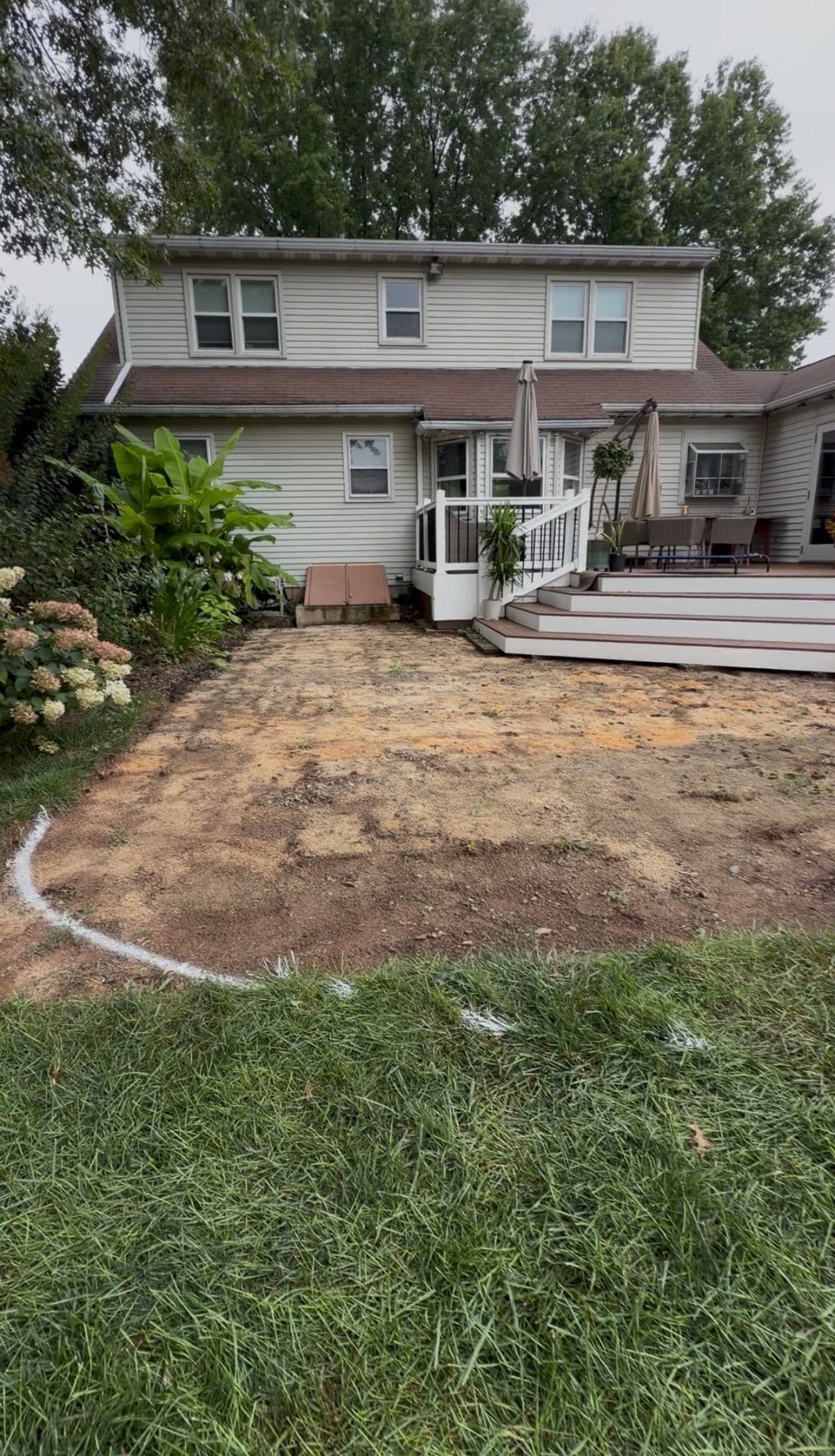
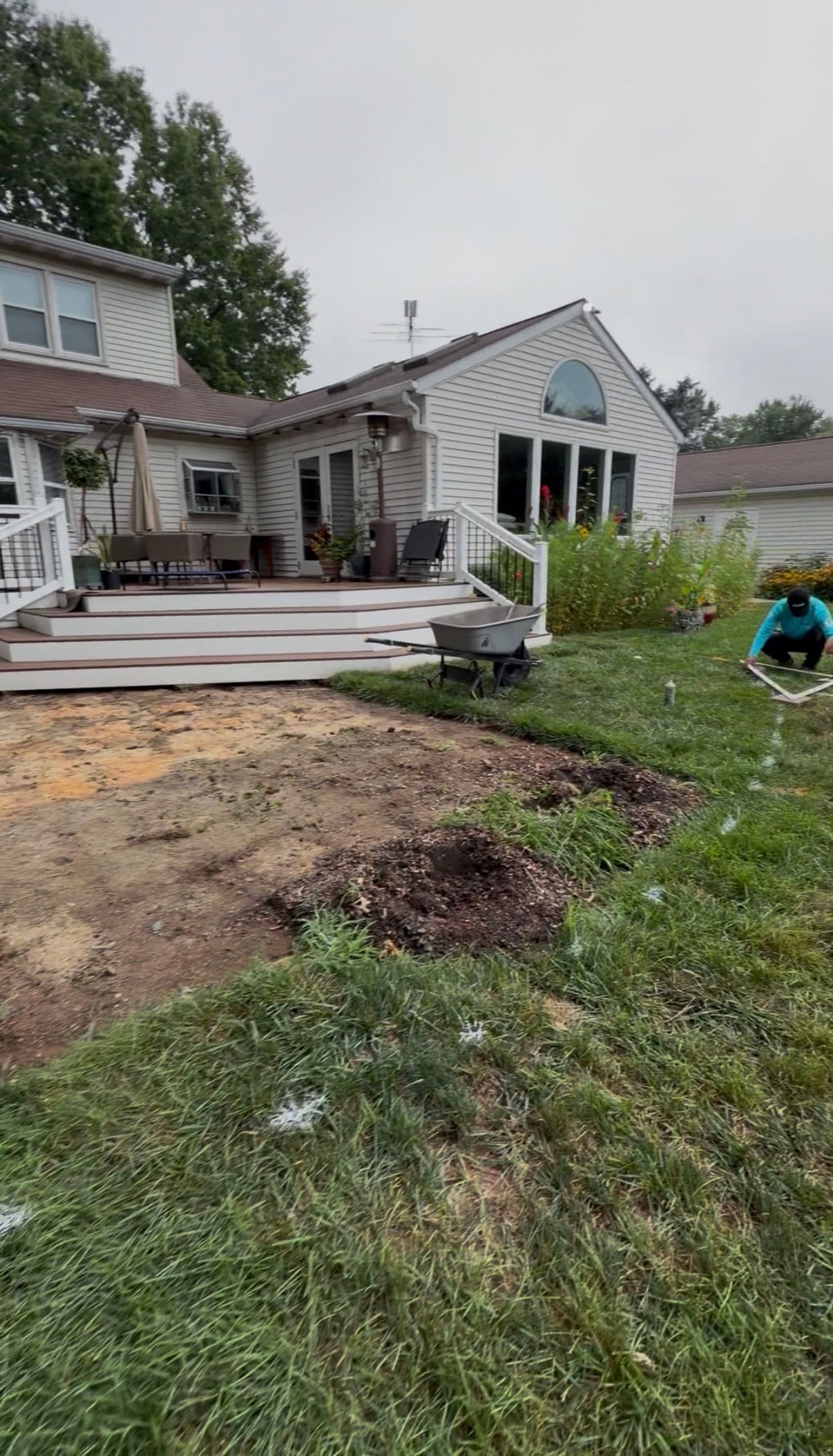
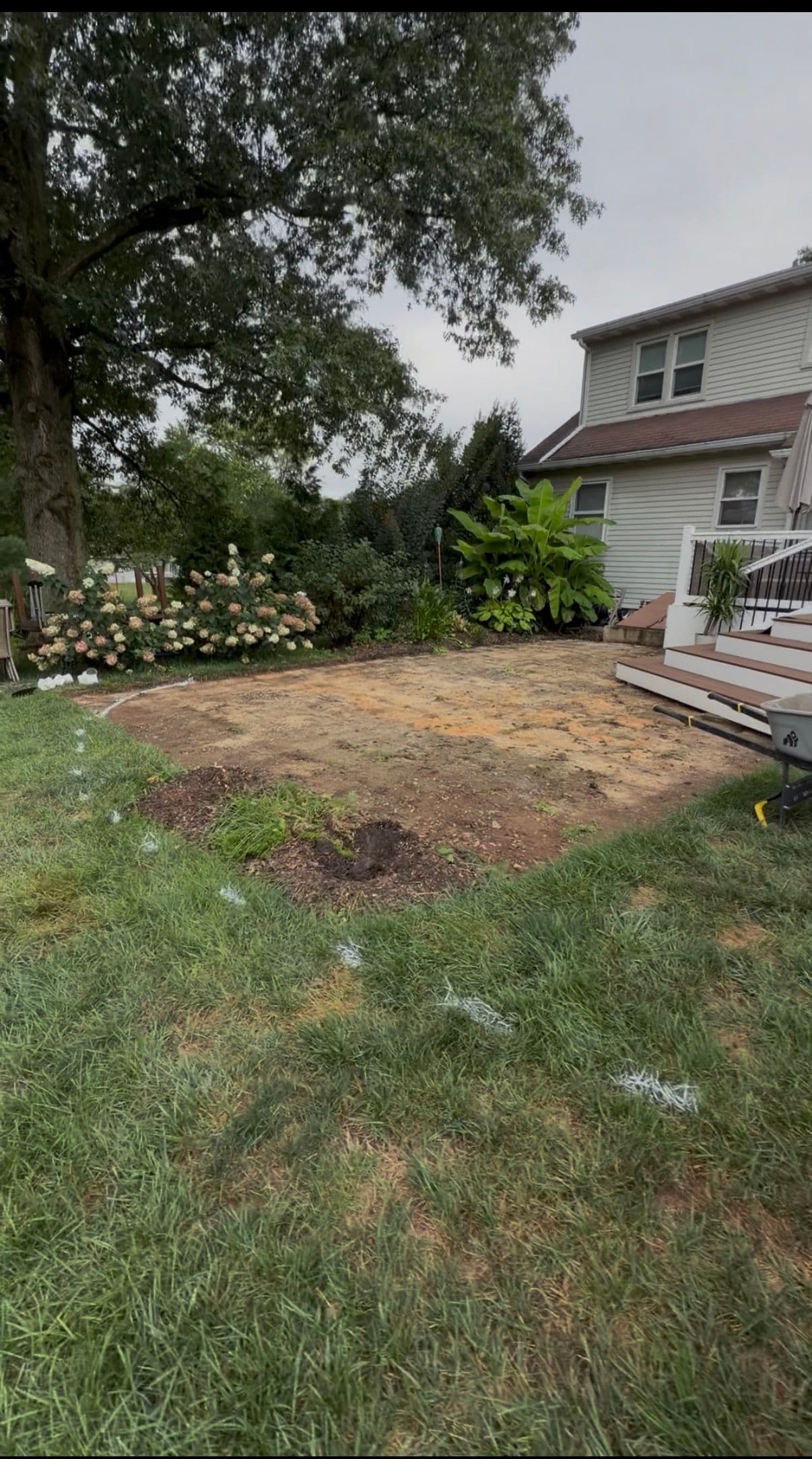
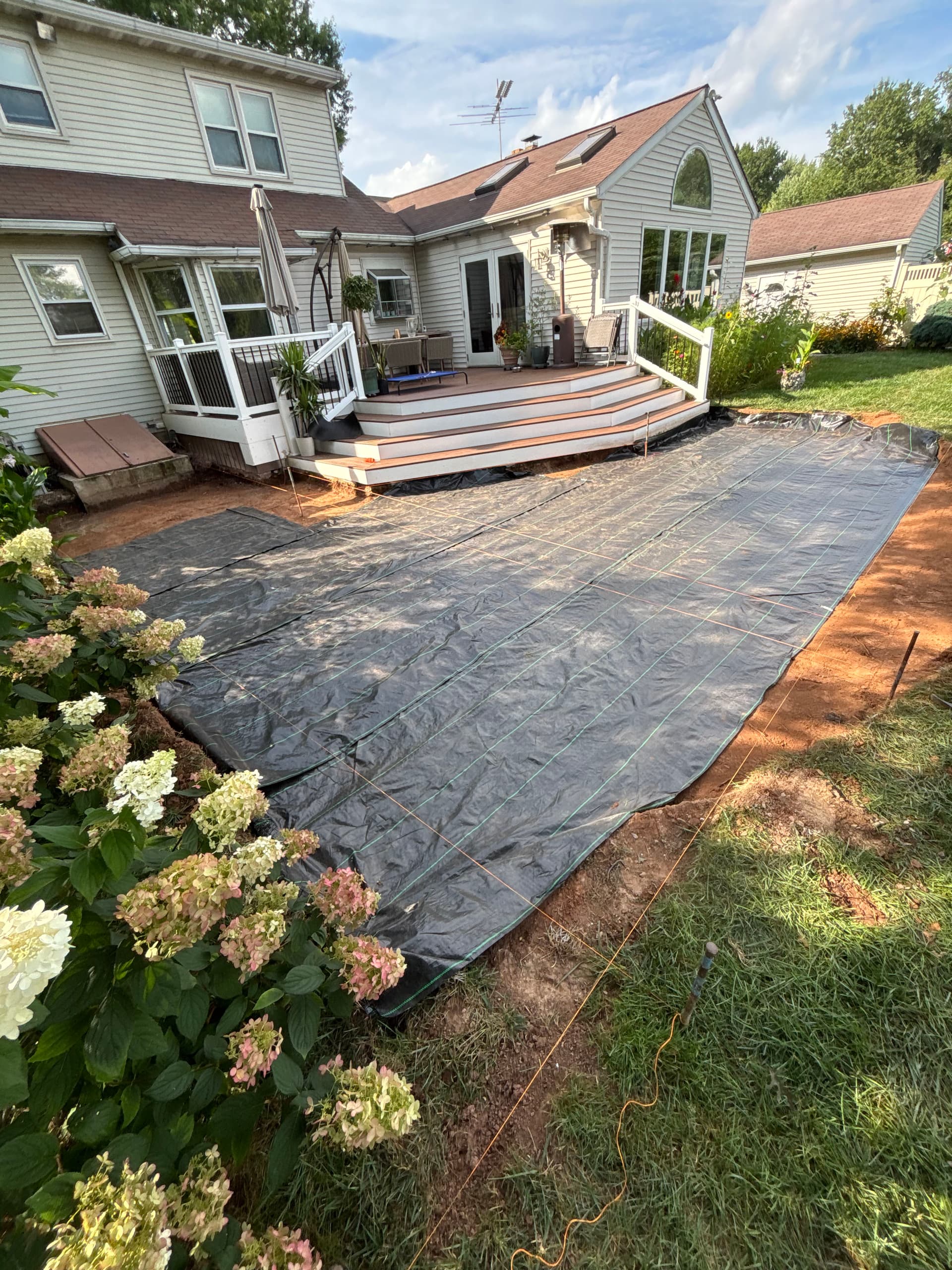
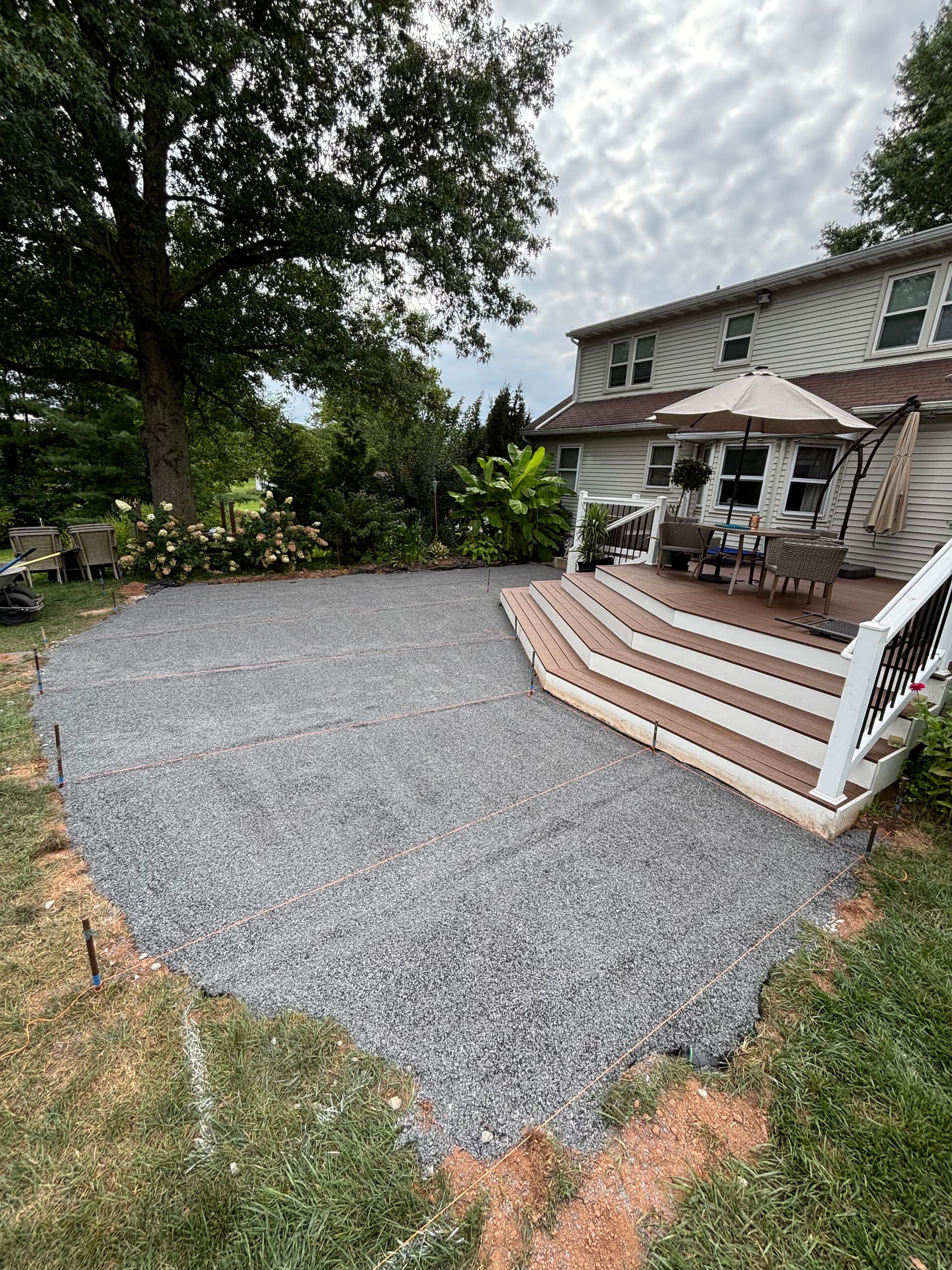
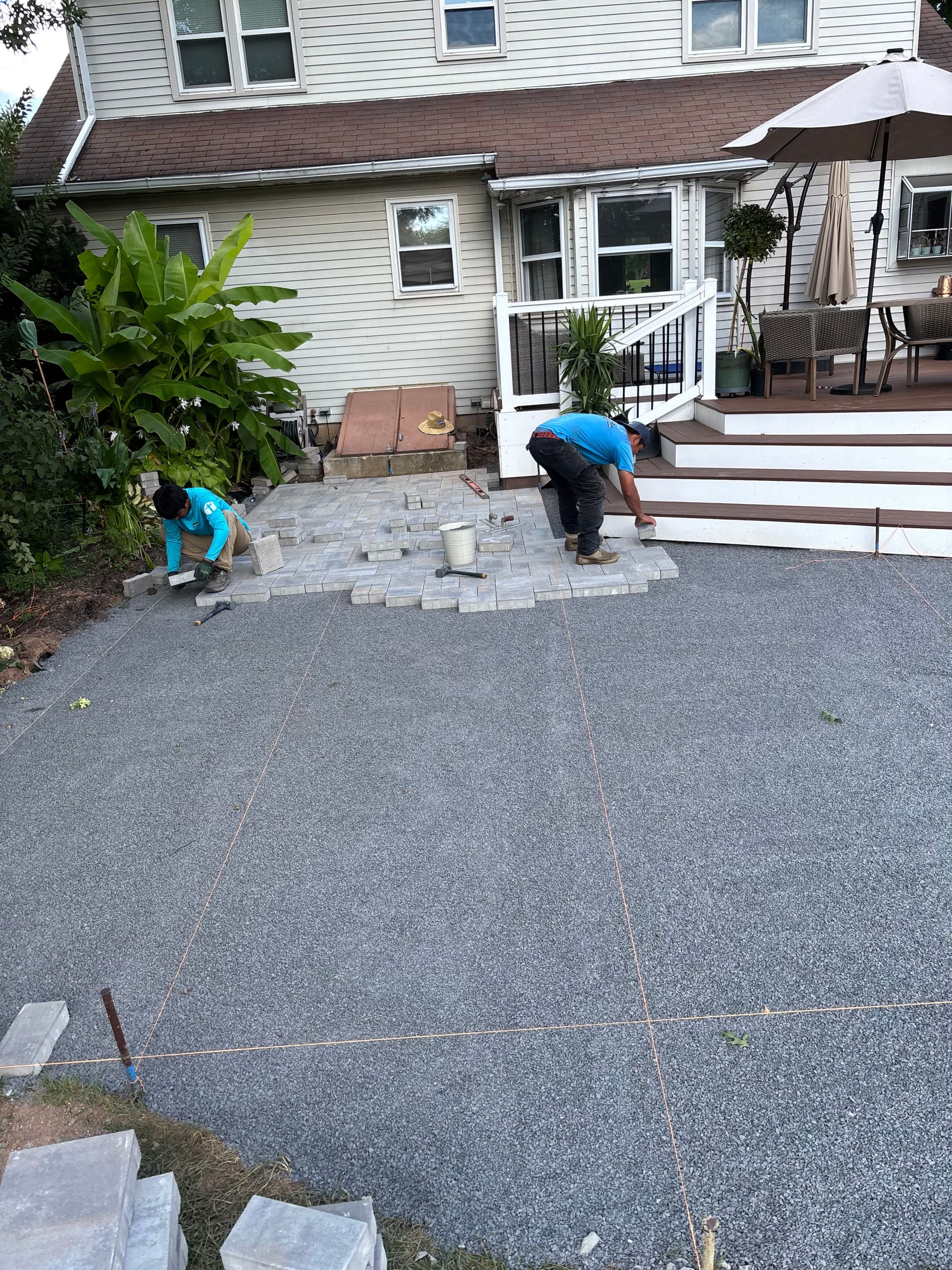
We started from scratch. Full excavation of the area, old material pulled out, and a proper base system built before a single paver went down. You can see the progression - bare, graded soil first, then weed barrier laid out across the entire footprint, followed by a compacted gravel base that spans the full area. String lines were set to make sure everything was pitched correctly away from the house. That drainage detail matters a lot. Water sitting against a foundation is a problem nobody wants.
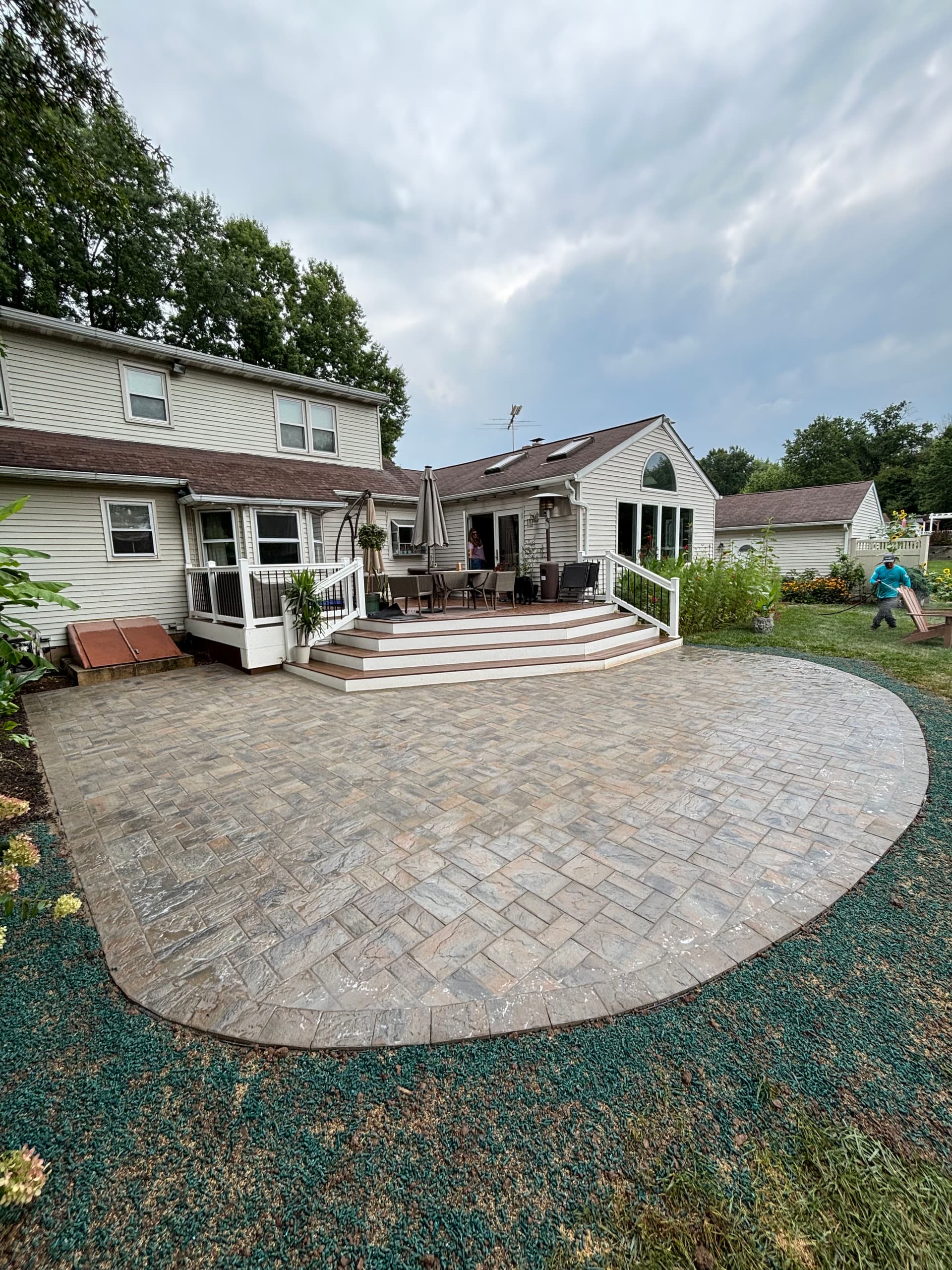
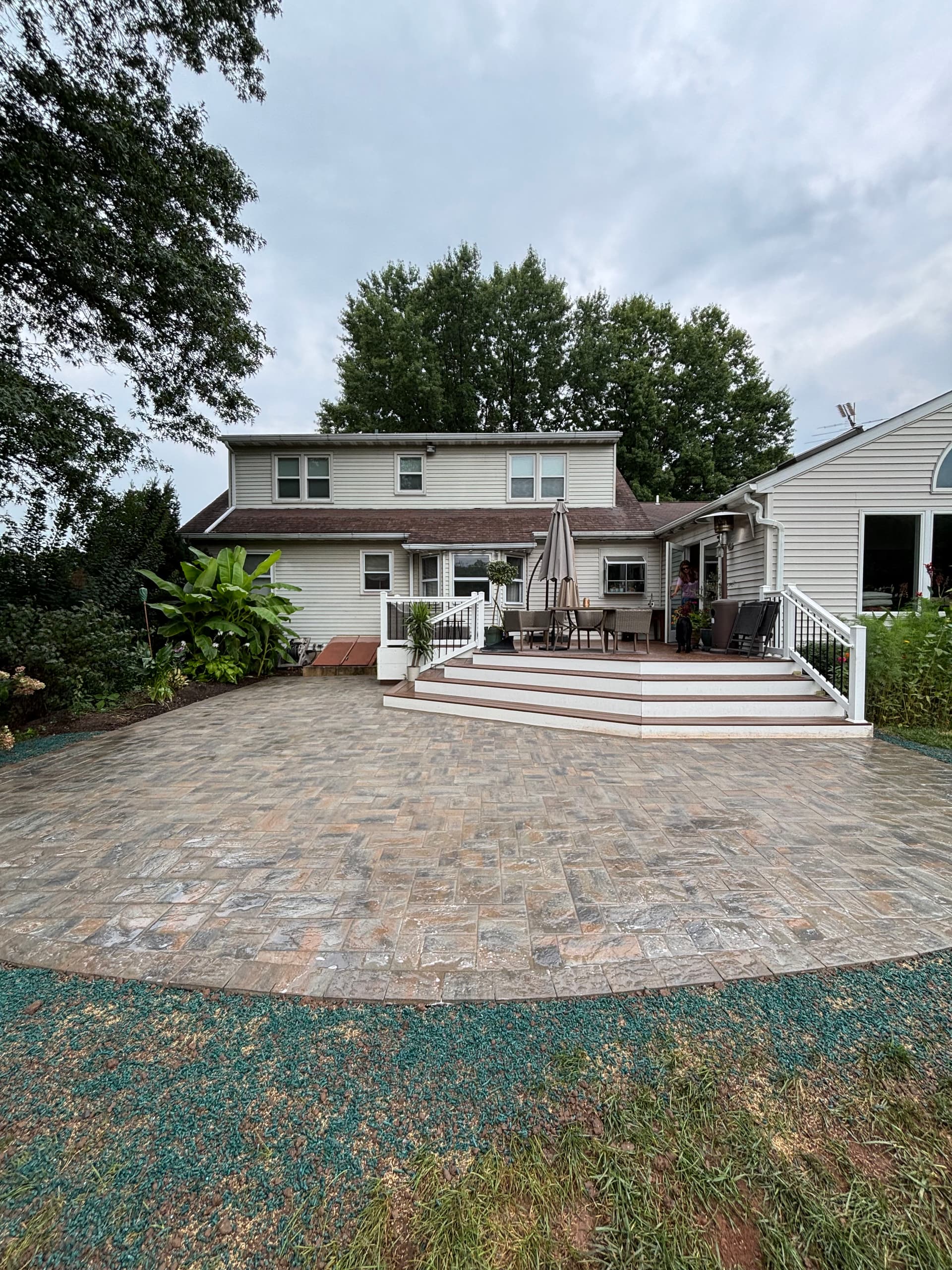
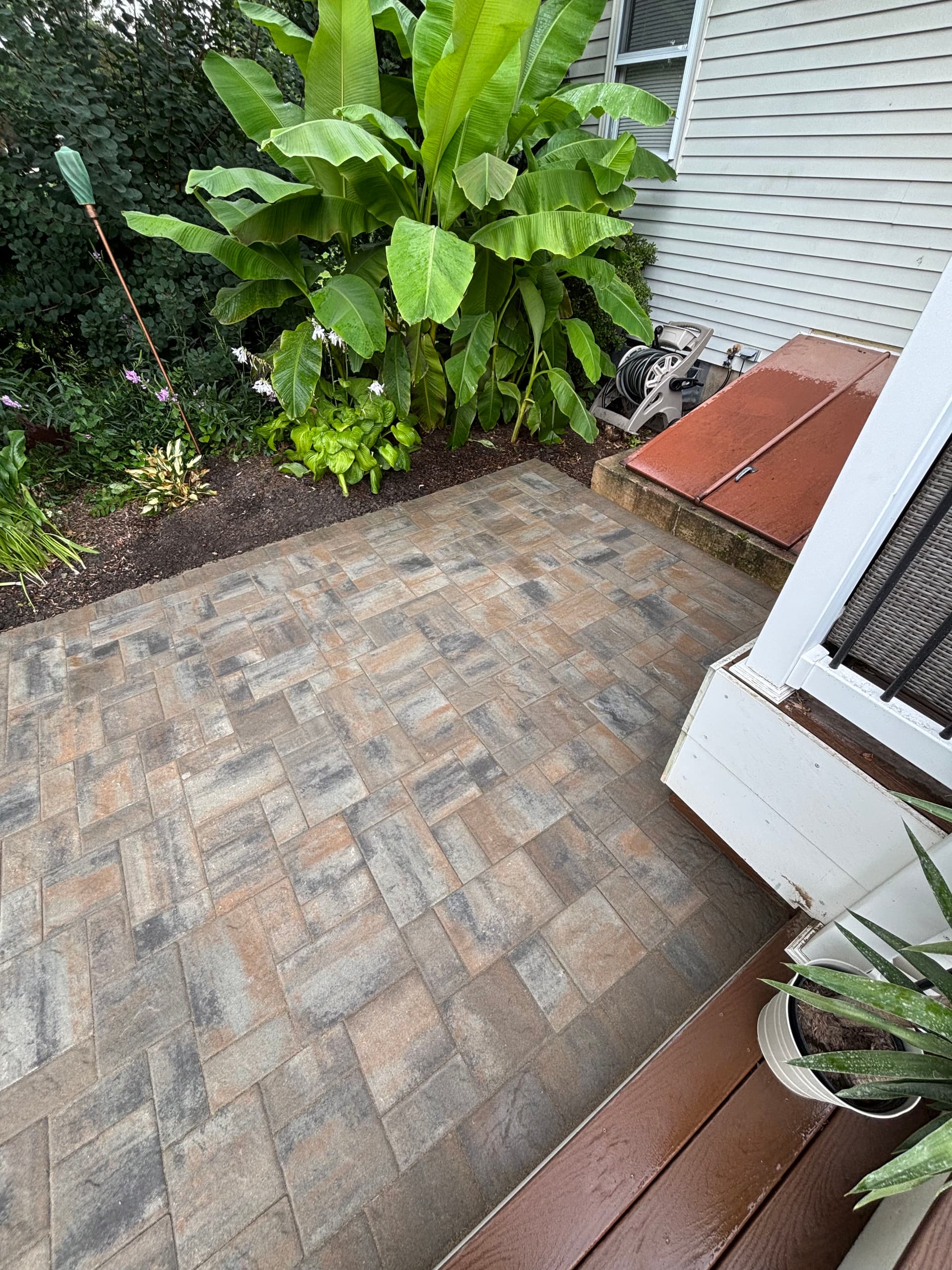
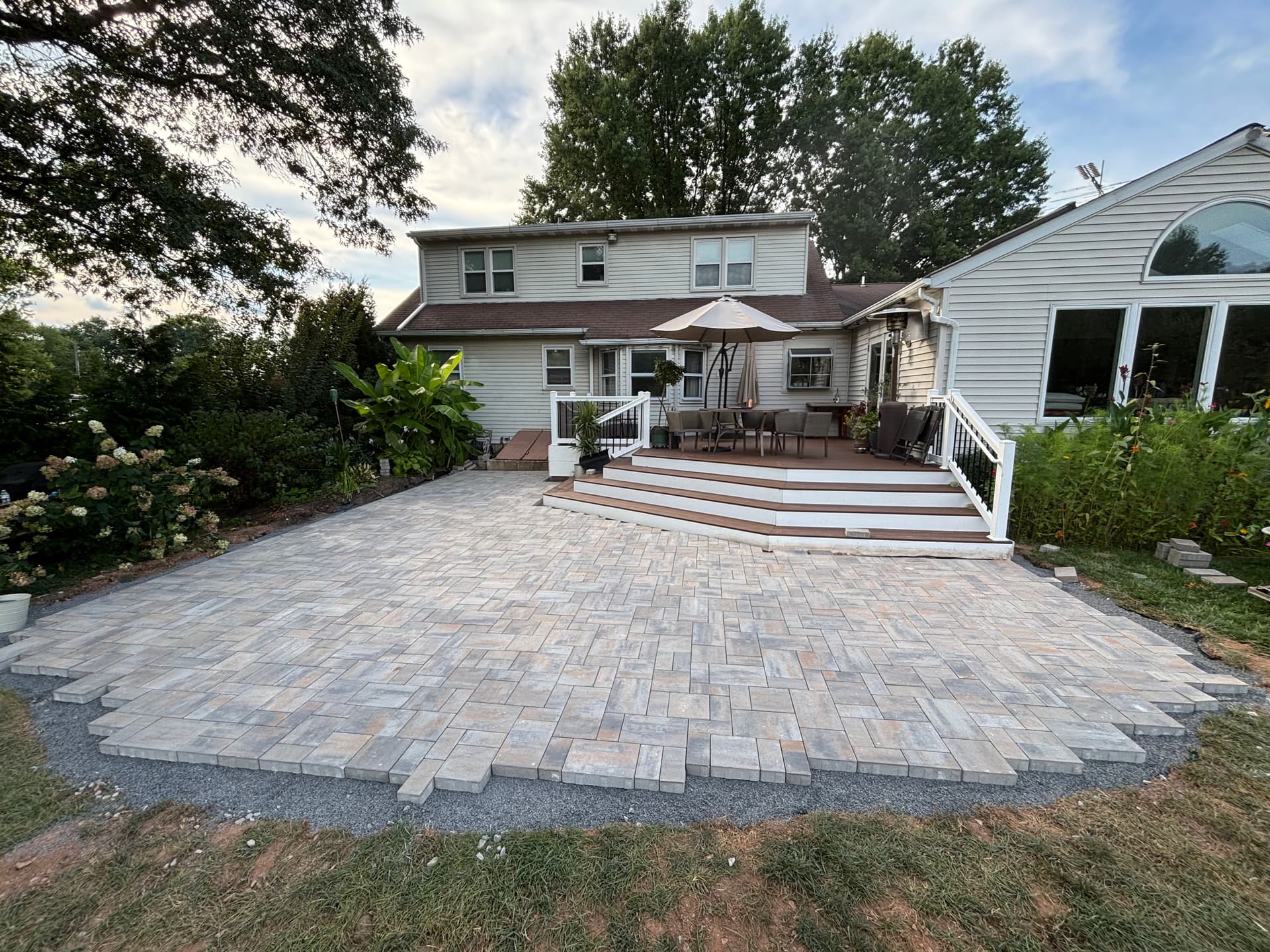
Once the base was solid, the crew started laying pavers from the deck steps outward. The pattern is a running herringbone-style mix using large-format pavers with a natural stone look - warm tans, cool grays, and earthy browns that blend well with the existing deck and landscaping. The curved front edge gives the whole space a finished, intentional shape rather than just a flat rectangle dropped in the yard.
The end result is 500 square feet of solid, functional outdoor space that ties directly into the existing deck. What was a tired, failing patio is now a spot worth actually spending time on. The whole job - excavation, base work, and full paver installation - wrapped up in about a week.
This is what paver hardscaping is supposed to look like when it's done right. Not just pretty on top, but built correctly underneath so it holds up for years without settling, shifting, or draining toward the house.