Hydroseeding a Bare Yard Back to Life
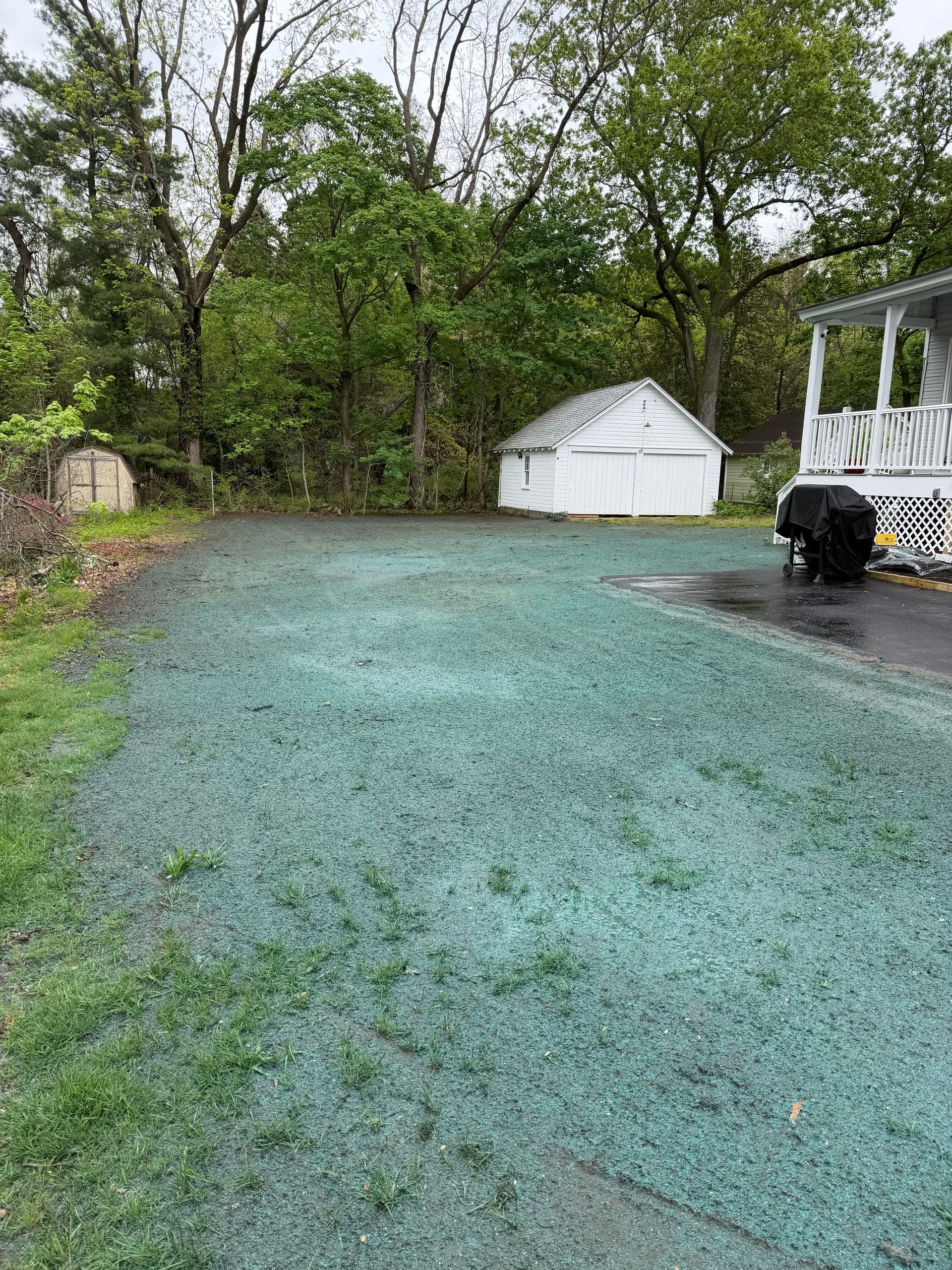
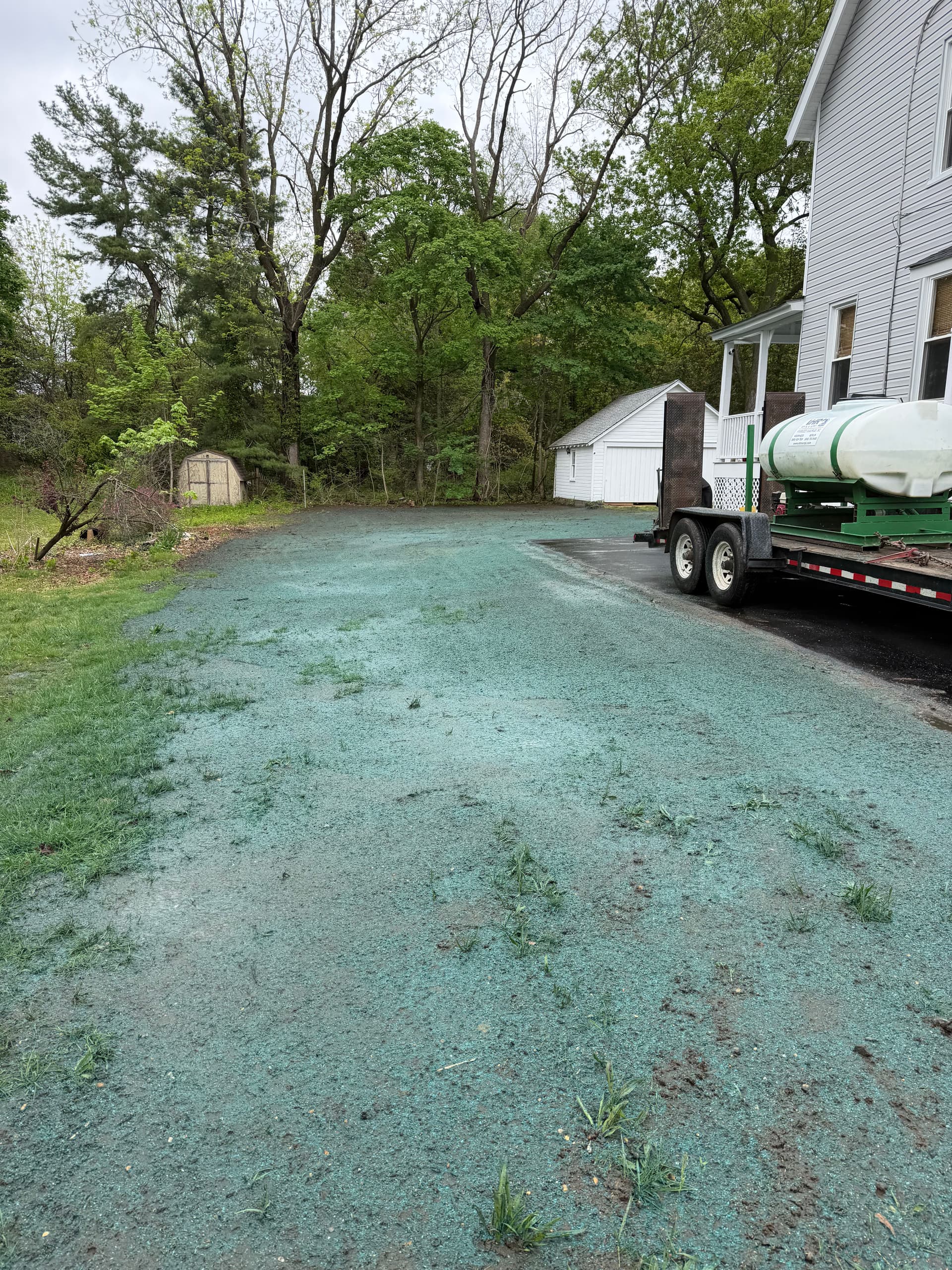
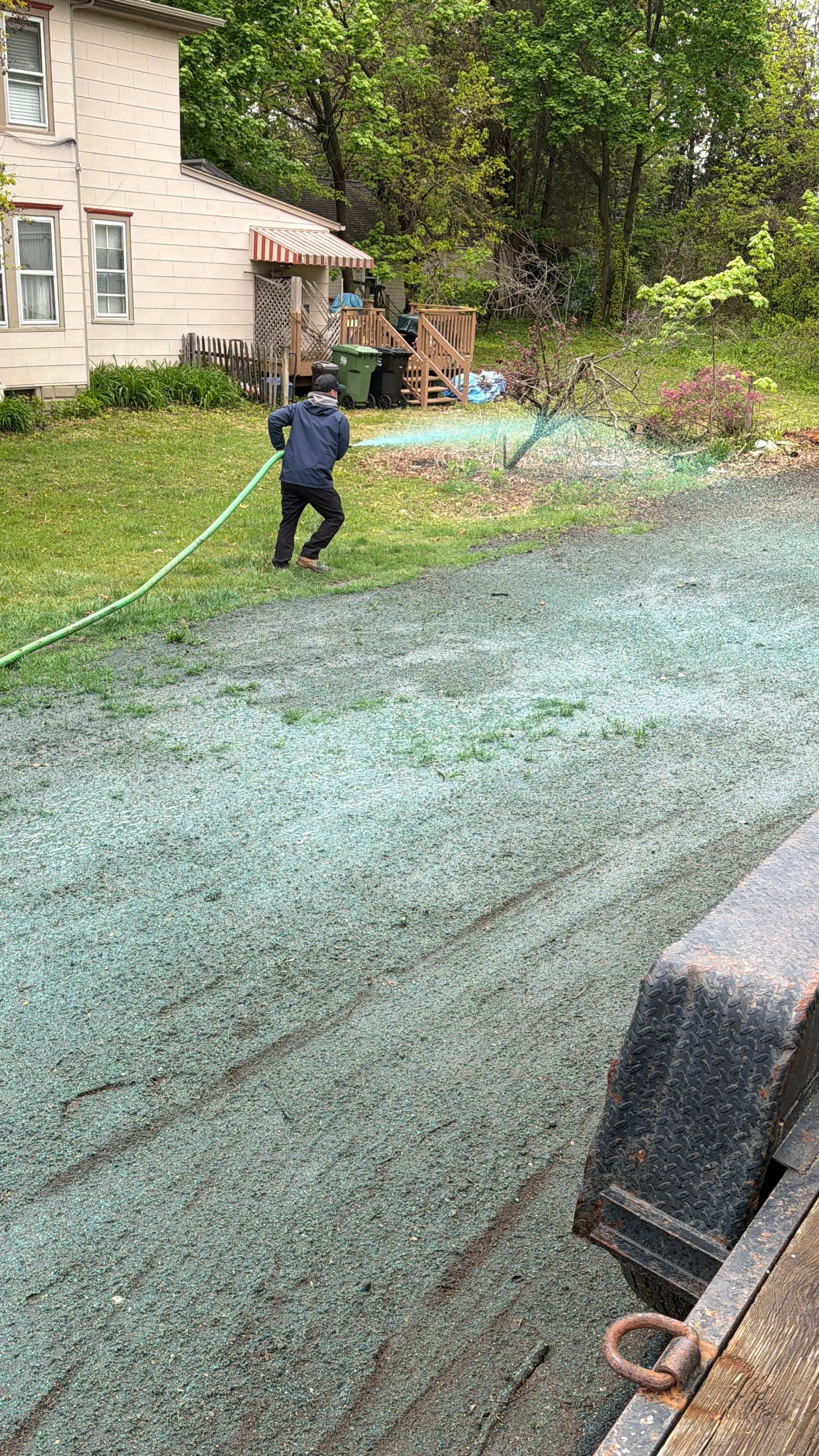
Not every bare yard calls for the same solution. Some properties are a good fit for sod, some do fine with straight seeding, and others - like this one - are a great candidate for hydroseeding. Knowing the difference is half the battle.
Hydroseeding works by mixing grass seed with water, starter fertilizer, and fiber mulch into a slurry that gets sprayed directly onto the soil. That teal-green color you see coating the ground? That's the mulch. It acts as a protective layer that holds moisture against the seed, which is one of the biggest factors in getting consistent germination across the whole area.
What makes hydroseeding stand out is how well it handles larger or more open areas. Spreading that slurry evenly across bare ground gives the seed a much better environment to work with compared to just throwing seed down and hoping for the best. The fiber mulch does a lot of the heavy lifting - keeping seed from washing away, locking in moisture, and giving the seedbed some structure while the roots establish.
We always walk through the options with homeowners before recommending an approach. The right method depends on the size of the area, the soil conditions, the budget, and what the end goal looks like. There's no single answer that works for every yard, and pushing one method when another makes more sense doesn't do anyone any favors.
If you've got a bare or struggling area and you're not sure where to start, we're happy to take a look and give you a straight answer on what we think will work best for your situation.